
Bench Warrants in Prince George County
People say "bench warrant" when a court orders someone into custody after a missed date or some other noncompliance. Virginia courts pick from a few tools, though: a show-cause summons, a capias, or an arrest warrant, depending on the case and what the judge does. Prince George County posts no public warrant roster that settles the question from home, so the real task is finding which court set the obligation in the first place. General District Court handles traffic, misdemeanors, and felony preliminary hearings, and Circuit Court handles felony trials and criminal appeals. JDR covers family, support, custody, and juvenile matters. The court level shapes both the record route and the process available to you.
Prince George County DC-361 Bench Warrant
Virginia's DC-361 form carries the title "CAPIAS - ATTACHMENT OF THE BODY." It is a court order for custody, written to the terms of the process that issued it. Under the GDC Manual's statewide sequence, serving a DC-361 can lead to custody and a bail hearing before a magistrate. That description does not promise where Prince George County holds a person, when a hearing happens, or what bond gets set. The official DC-361 form and DC-360 form are separate documents, so ask the clerk which one sits in the case file. For family-court matters, the Judiciary's JDR form index lists the show-cause and capias materials.
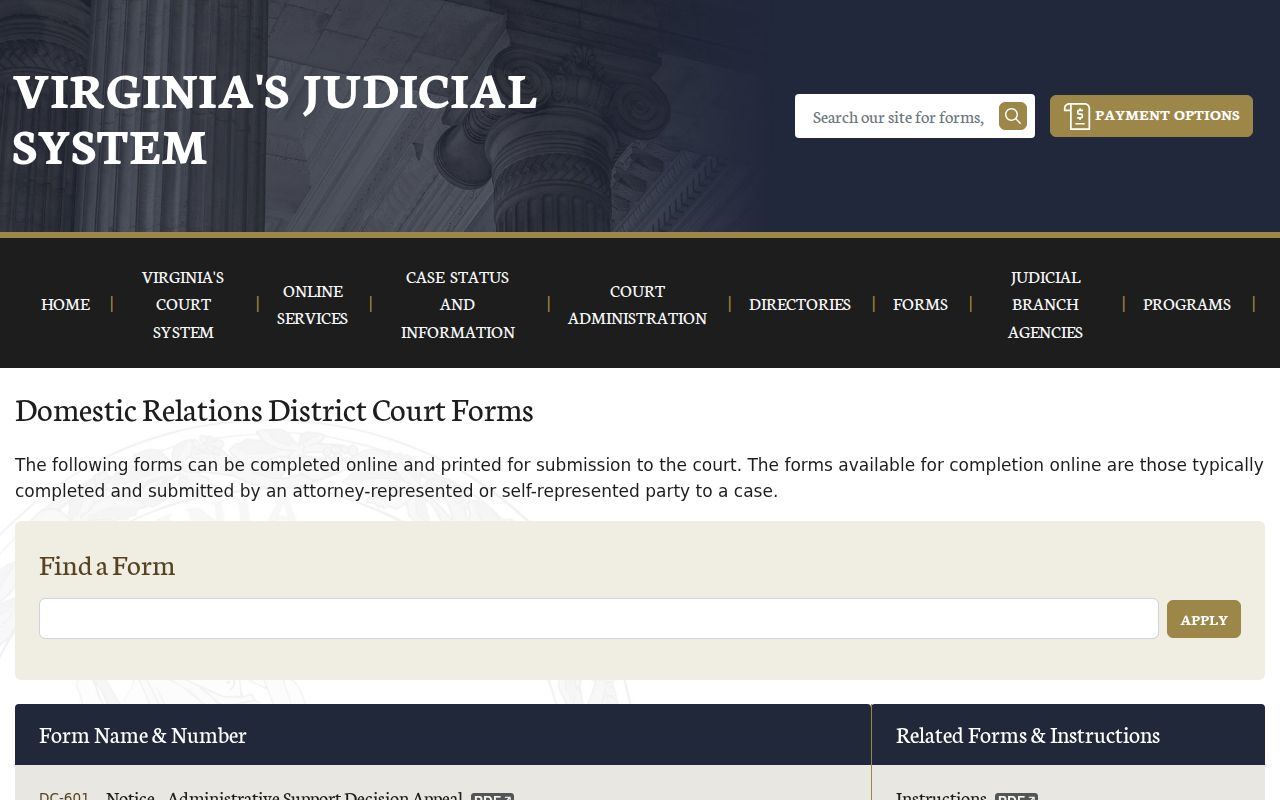
These are form labels, not a person's court filing or a local recall instruction.
How a Bench Warrant Is Issued
Every one of these processes starts with an obligation a court already imposed: a hearing date, an order, something concrete. When the appearance does not happen, the judge may direct further process. Virginia's General District Court Manual lays out the DC-360 show-cause and DC-361 capias procedures in eligible settings, and the same framework reaches Prince George County. But a missed date alone does not prove a warrant issued. Check the case record, then ask the issuing clerk what action the court actually took. Virginia Code §19.2-128 covers willful failure to appear after release or summons, on the conditions the law states. A traffic matter can pull in separate rules too. Circuit, GDC, and JDR files do not run to the same outcome, so do not assume they do.
Missed Prince George Date, Different Process
A missed date in Prince George County can produce very different paperwork. The GDC Manual explains that a show-cause summons may issue where the court wants someone back to explain noncompliance, while a capias authorizes attachment on its own terms. An arrest warrant is different again: it follows a probable-cause criminal charge. The paper itself, plus the case that spawned it, decides the path, not the loose label people use. The Prince George General District Court page gives the local jurisdiction and clerk contacts. The General District Court Manual walks through the broader court workflow.
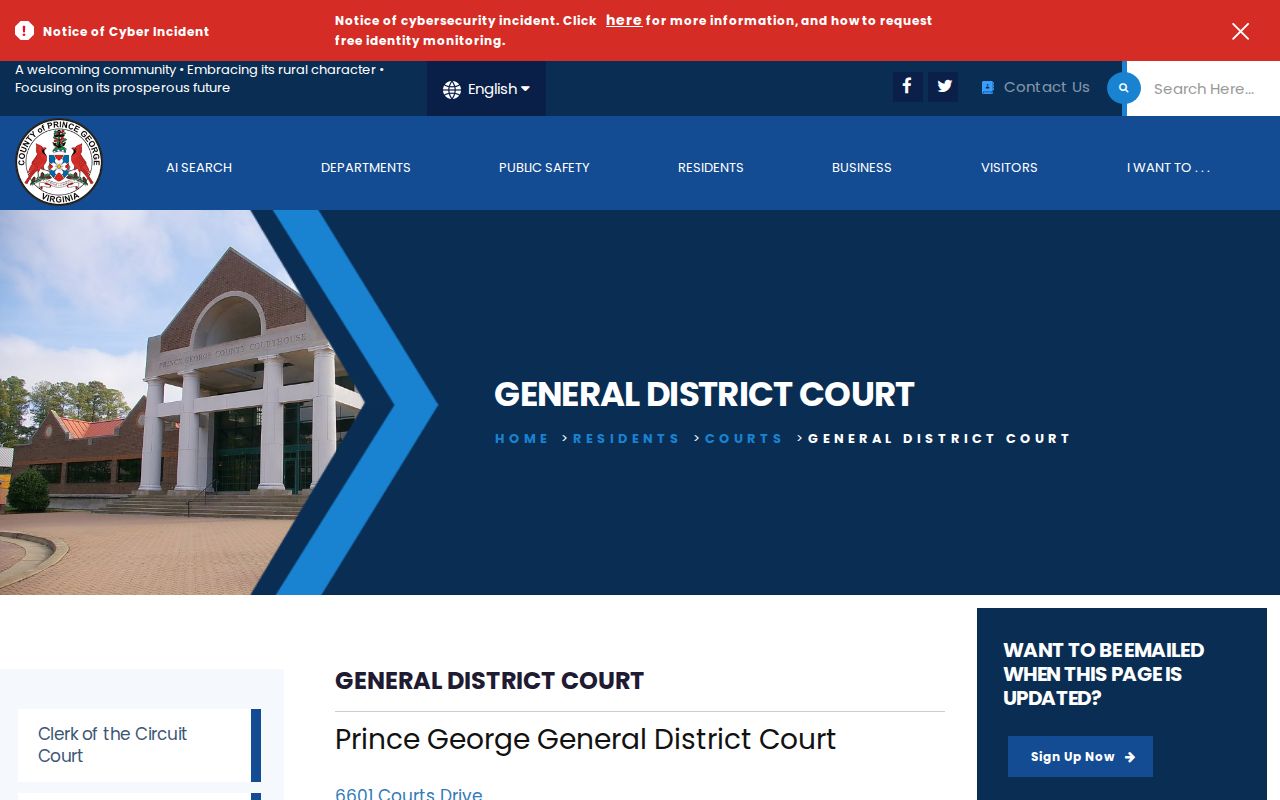
The county court route finds the right clerk. Local shorthand never replaces the actual court order.
Bench Warrant vs Arrest Warrant
Both a bench warrant and an arrest warrant can end in custody, but they arise for different reasons in Prince George County. Bench-type process follows a court obligation; an arrest warrant follows a probable-cause complaint. A show-cause summons may come first in nonappearance matters. The record should name the underlying case and the process type.
| Feature | Bench-type process | Arrest warrant |
|---|---|---|
| Trigger | Missed appearance or noncompliance with a court obligation. | Sworn complaint and probable-cause review. |
| Form clue | DC-360 show-cause or DC-361 capias may apply. | DC-312 felony or DC-314 misdemeanor form schema. |
| Next authority | Issuing court controls recall or a new date. | Issuing court or magistrate controls the case and process. |
| Record holder | The court that set the original case. | The court identified on the warrant and case file. |
For probable-cause process, see the separate Prince George County arrest warrant route and its official form fields.
Prince George County GDC and JDR FTA Routes
The two lower-court clerks in Prince George County share one published contact route, though their case areas differ. GDC takes traffic, adult misdemeanors, and felony preliminary hearings; JDR takes juvenile and domestic matters, including support and custody, and juvenile records stay restricted. The combined clerk can tell you which division holds a matter and what public information may be released. A Circuit Court felony or criminal appeal belongs with the Circuit Clerk. The combined GDC/JDR court page lists contacts and public schedules, and its lower-court information screen is only an information screen, not a case result.
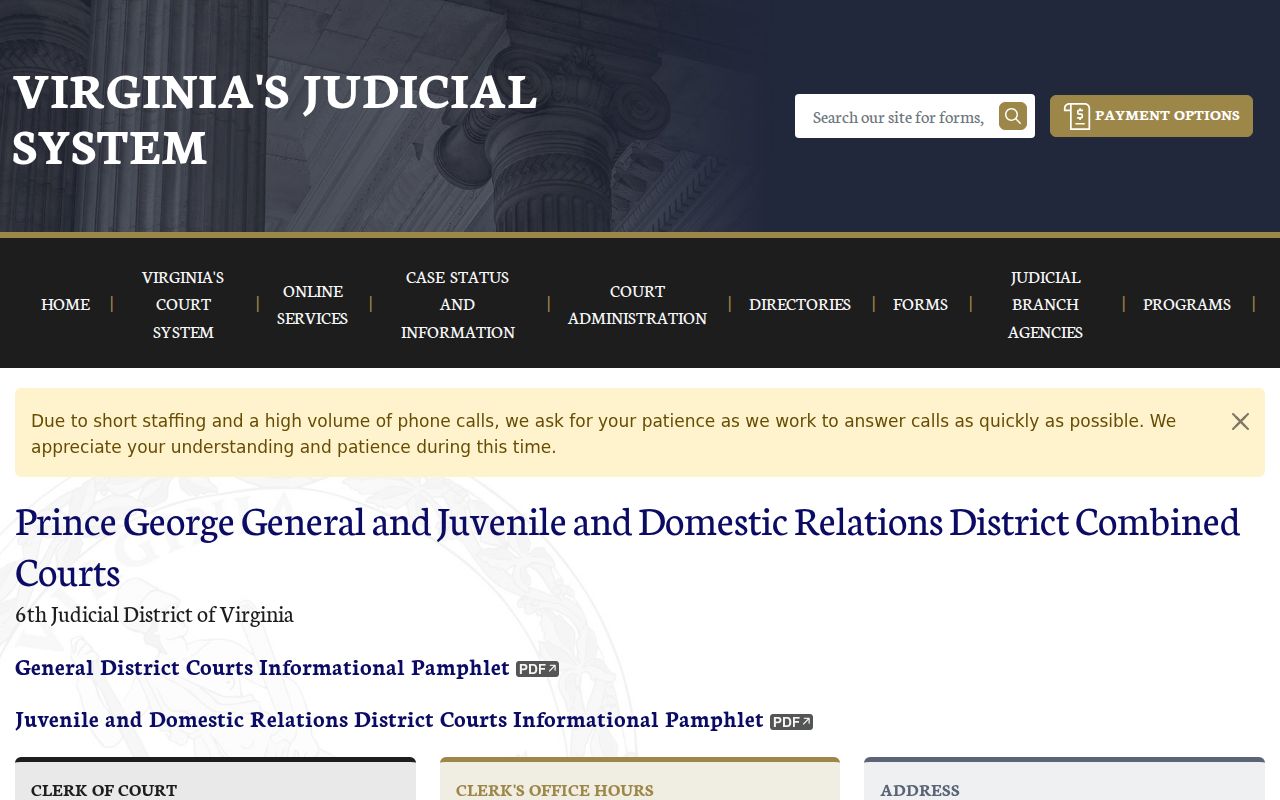
Call the clerk before a court visit and ask which division holds the file.
How to Resolve a Prince George County Bench Warrant
Follow the issuing court's instructions. Prince George County has published no walk-in warrant docket, no surrender counter, no recall fee, and no local filing procedure. A recall or reset is a court action. No web form can trigger it.
- Search the case by name, number, or date, then identify the court and process shown.
- Call the clerk and ask whether the court requires an appearance, show-cause hearing, motion, new date, or attorney filing.
- Call the Sheriff's Office before any custody-related visit. Ask what it can confirm about service and where to direct surrender or bond questions.
- Keep the court's instructions and confirm the case entry after the court acts.
Caution: Do not assume that paying a fine or locating a case online recalls a bench warrant. Confirm the court's order and next date with its clerk.
A Prince George County Recall Is a Court Action
The statewide form library includes DC-323, Recall of Process, but Prince George County has published no filing steps, local fees, or rule on filing without an attorney. Ask the clerk about the local procedure before preparing anything. A judge may still need to act on the underlying obligation, and the record may take time to reflect it. A sheriff's service answer is not a recall. The sheriff can speak to service, but the originating court alone controls whether the process stays in force. If a capias has been served, the GDC Manual describes presentation to a magistrate for a bail hearing; the county publishes no bond schedule. The Circuit Court personnel form index shows a separate circuit-level capias route, distinct from GDC or JDR paperwork.
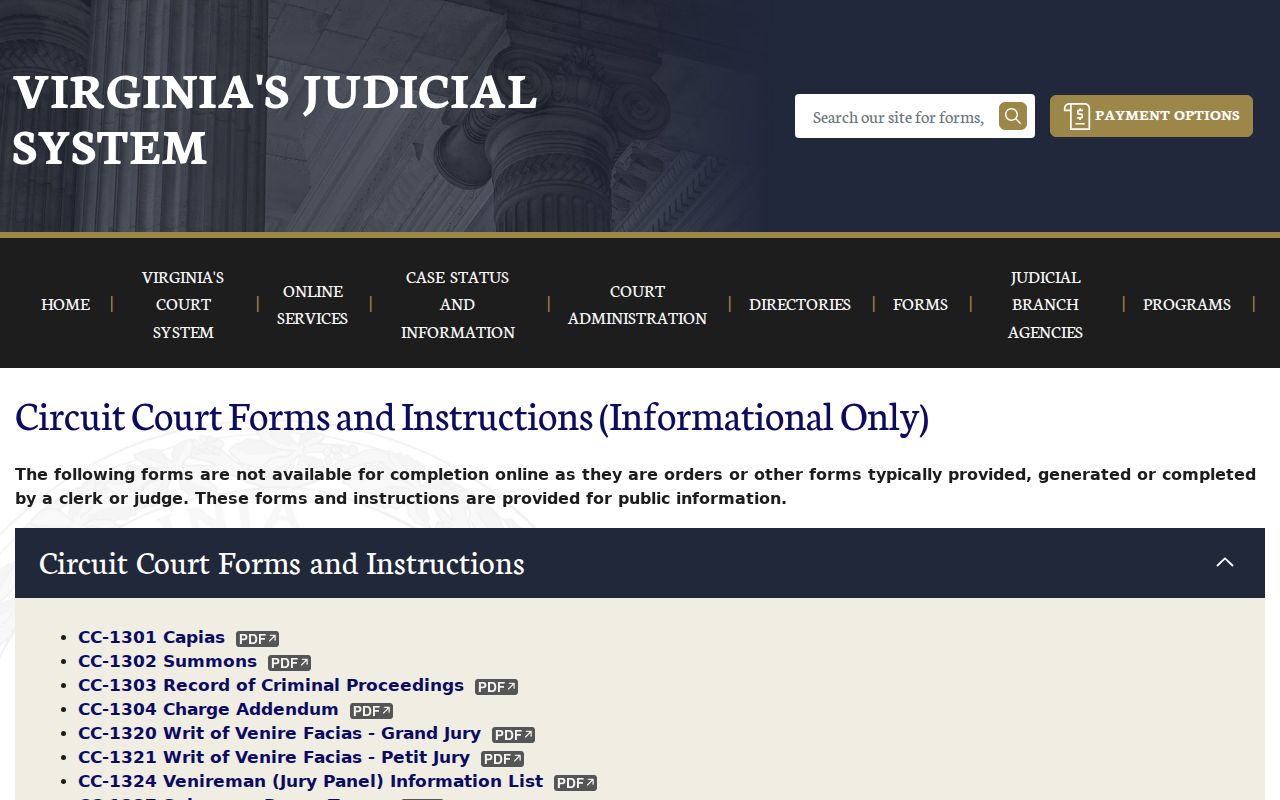
Confirm the right form and filing route with the clerk holding the specific Prince George County case.
Which Prince George County Court Issued It
Check the paperwork first. The citation, summons, case number, or any earlier notice from the court tells you which judge is behind the bench warrant. In Prince George County, traffic cases, misdemeanors, and preliminary hearings usually run through Prince George General District Court, while felony trials and criminal appeals belong to Circuit Court. JDR matters go through the combined clerk, and the same online search may not reach them. The Sheriff's Office handles service questions on its own line. Why does the clerk assignment matter? Only the originating court can recall a bench warrant, set a new date, or take any other action on the case, so naming the right one saves a wasted trip. For digging into court files, the court-record guide covers clerk access, which sits apart from county FOIA requests. No city municipal court operates inside the county, so there is no separate city-court bench-warrant route to worry about.
No Prince George County Amnesty Docket
Prince George County runs no amnesty docket. Neither the county nor the Virginia Judiciary offers a warrant amnesty week, a safe-surrender event, or any special bench-warrant docket, so treat rumors of a fee waiver with doubt and never assume an event covers every case. The clerk can tell you whether a current notice or program fits your specific matter. Virginia law and the issuing order control what happens next. If custody or bond worries you, talk with an attorney and call the sheriff before you show up. One caution on fees: the county's civil-process page lists charges for paper service, and those amounts are not criminal warrant bond, recall, or clearance charges.