
Arrest Warrants in Prince George County
An arrest warrant lets an officer take someone into custody on the court's order. Virginia Code §§19.2-71 and 19.2-72 set out who may issue arrest process and the sworn complaint, examination, and probable-cause basis behind it. The issuing court or magistrate names the charge and the return route. Prince George County publishes no sheriff warrant roster, so a person checking on a personal matter works from case information first. The public case search may show the related case. Still, a visible case entry is not a live warrant certificate. Sealed material, a new process entry, or restricted records can stay offline. Confirm with the court before drawing any conclusion about an active warrant.
DC-311 Starts a Prince George County Warrant Record
Virginia's DC-311 is the criminal complaint form. It records the court and locality, the accused person's details, offense date, jurisdiction, facts, complainant, and oath. Some non-law-enforcement felony complaints also carry prior-authorization information. The form creates a complaint record for review by the court. A Prince George County warrant record may begin here, but the paper itself does not prove that a warrant issued or how the charge was resolved. The official Virginia criminal form index lists DC-311 along with DC-312 and DC-314.
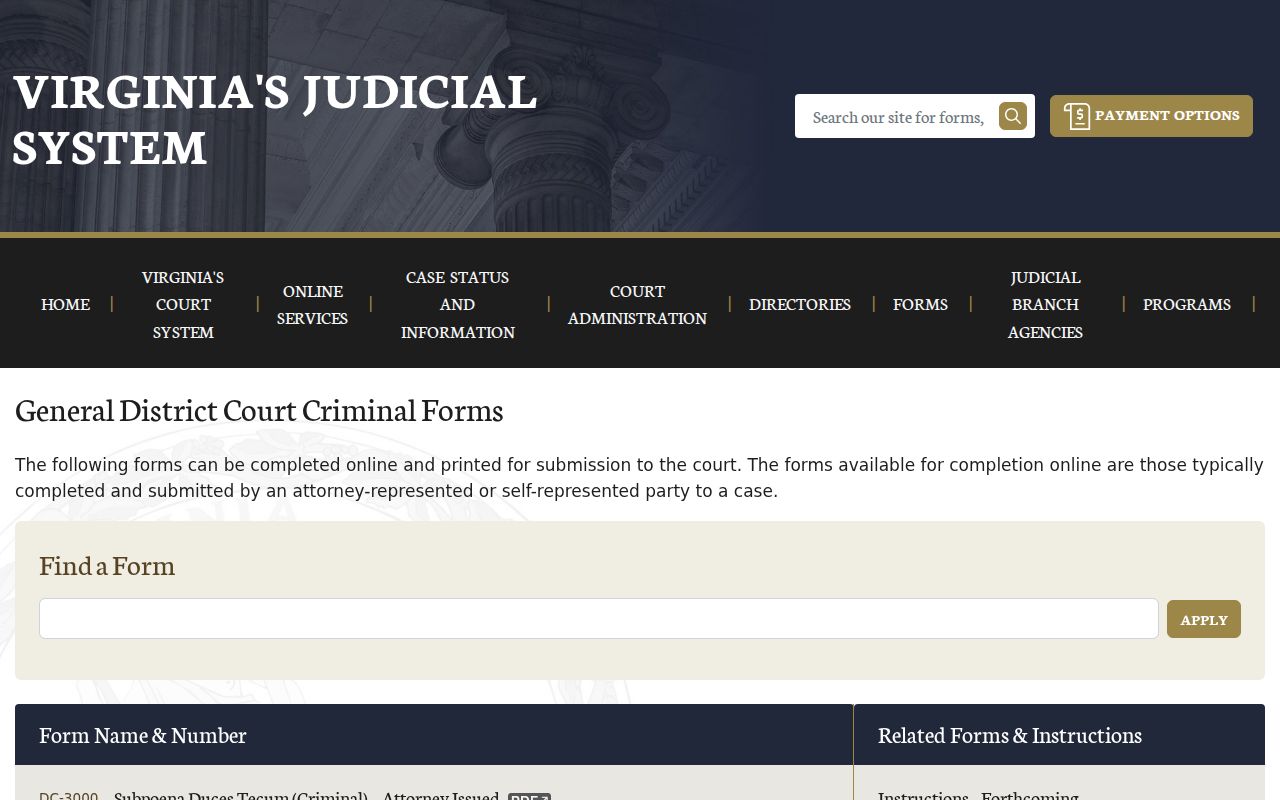
Treat the blank Prince George County form family as a map of the process fields. It cannot tell you where any one case stands.
What a Prince George County Arrest Warrant Contains
The official criminal-form manual splits the felony DC-312 and misdemeanor DC-314 schemas. Both can identify the court, the offense, the issuer, the issue time, the accused, the service officer, and return details. Prince George County publishes no sample warrant or local warrant-number format. A real warrant's number, bond amount, and status come only from the issuing court.
| Court and charge | Jurisdiction, offense date, code section, description, and felony or misdemeanor class. |
|---|---|
| Issuance | Complainant, issue date and time, issuing authority, and case number. |
| Person details | Name and descriptors on the official form; private values are not reproduced here. |
| Service | Officer, badge, agency, jurisdiction, arrest/service date, and return information. |
| Follow-up | Attorney, hearing, tracking and VCC fields, and later trial or disposition entries where applicable. |
Prince George County Sheriff and Police Serve Different Roles
The Prince George County Sheriff's Office serves criminal papers, guards courtrooms, handles transport, and runs extraditions. County Police is a separate department. It may execute process under its own authority, and its public page offers department contacts plus a non-emergency line, but no warrant lookup. For a service question, ask the serving agency. For the case file, ask the court clerk. The County Police page shows that separate-agency route.
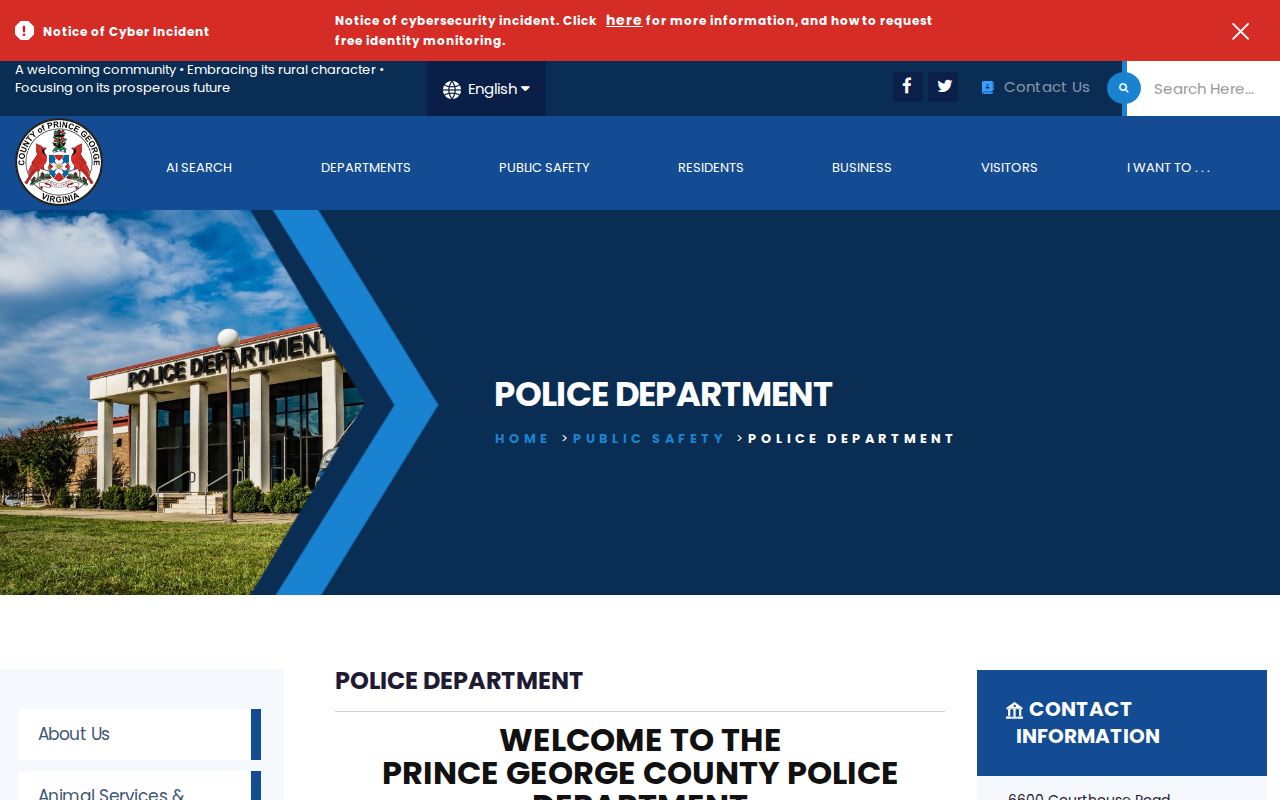
The department's records contact for Prince George County sits apart from both the Sheriff's Office and the issuing court clerk.
How Prince George County Arrest Warrants Are Served
Virginia Code §19.2-76 governs execution and return of an arrest warrant, capias, or summons. The service block on the paper records who acted and what happened. The Prince George sheriff page confirms service of criminal papers as a core function. A police officer may also execute process within that agency's authority. Do not assume one office holds every warrant. A public case entry alone proves no service. If the worry is your own file, confirm its issuing court first. Then ask the Sheriff's Office what it can say about service, surrender, or bond. The county publishes no warrant-unit line, walk-in schedule, or bond window.
Prince George County Service and Return Fields
The reverse side of the DC-312 and DC-314 schemas carries arrest or service details plus later court information. Those fields separate an issued order from what happened after an officer received it. A return can record execution or nonexecution. A hearing or disposition may follow as another entry. Ask the originating clerk which fields are public and current. The court case record and the sheriff's field records may answer different parts of the question. Prince George County posts no public count of service attempts or outstanding warrants.
Arrest Warrant vs Summons vs Bench Warrant
These labels are not interchangeable. A summons directs a person to appear. An arrest warrant rests on probable cause. Bench-type process follows a court obligation, so in Prince George County a missed date may produce a DC-360 show-cause summons or a DC-361 capias rather than the standard arrest-warrant form.
| Process | Basis | Record route |
|---|---|---|
| Arrest warrant | Sworn complaint and probable-cause review. | Issuing court or magistrate; DC-312 or DC-314 form family. |
| Summons | Notice to appear on a court date. | Issuing court; later process depends on court action. |
| Bench-type process | Missed appearance or court-order noncompliance. | Originating court; DC-360 or DC-361 may be involved. |
Sealed Prince George County Arrest Warrants
A public case index will not necessarily show sealed charging papers or an active investigation. Virginia law lets certain law-enforcement information be withheld or redacted. Juvenile and sealed records carry their own limits. A blank search result does not establish that no process exists. Ask the Prince George County court clerk about public case information. If a public body withholds a record, ask it to cite the exemption. The statutory text of Virginia Code §2.2-3706 sets out law-enforcement record access rules. An attorney can advise whether a specific filing or order may be requested.
The Virginia Code law-enforcement records section explains access limits and required protections.
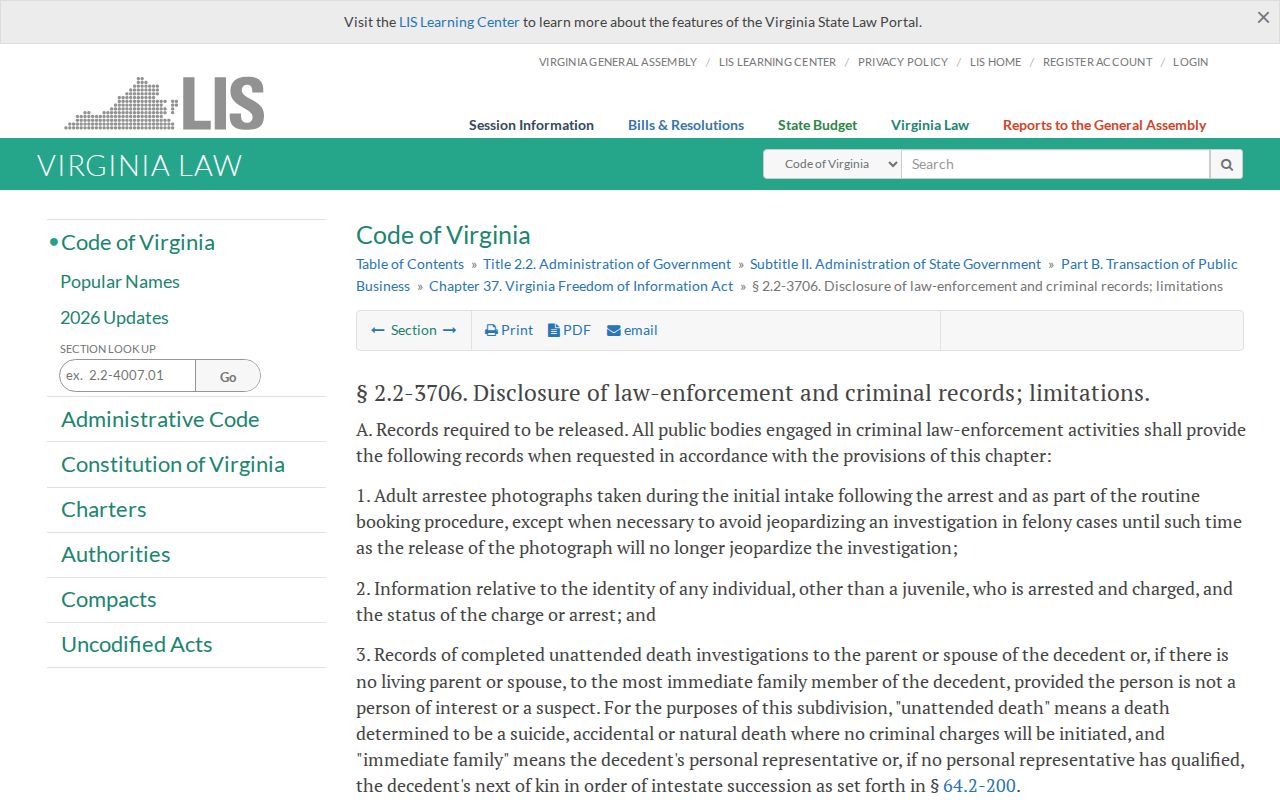
Read the statute alongside the Prince George County court file, and ask the clerk which record is public.
What to Do If There's a Warrant for You
First, pin down the details: which court issued the warrant, the case number, and the type of process. Then call that court's clerk before you show up, since a visit can turn into custody. Ask the clerk directly whether a hearing, an appearance, bond instructions, or a motion is on the table. Prince George County's Sheriff's Office can explain service routing, but only the issuing court can recall or quash its order. For a Circuit file, contact the Circuit Clerk; for traffic, misdemeanor, or preliminary-hearing matters, call the combined GDC/JDR clerk.
Important: Speak with an attorney before arranging a surrender or bond step. Prince George County publishes no walk-in surrender procedure, bond schedule, or accepted payment method.
The Prince George County warrant overview walks through the resolution path and lists the local clerk contacts.
Federal Warrants Use a Different System
A federal warrant will never appear in a Virginia OCIS result. Different system entirely. Prince George County sits in the Eastern District of Virginia's Richmond Division, so federal process there runs through that court. PACER and CourtListener/RECAP can surface public docket material, though sealed warrants stay unavailable. The U.S. Marshals Service handles federal fugitive process and is not a county roster. Take federal case questions to the federal court or an attorney. The official PACER page sets out federal docket access, and it is not a county warrant roster or a personal result.

Searching public federal dockets cannot confirm that a sealed Prince George County federal warrant exists or stays active.